


Interior Door Styles at a Glance
Interior doors are often treated as a finishing detail, but they can have a significant impact on the way a home looks and feels. From the moment someone enters a room, the doors, trim, hardware, and surrounding finishes contribute to the overall design. The right interior doors can make a traditional home feel more refined, give a contemporary space a cleaner appearance, or introduce character into a room that otherwise feels unfinished.
For homeowners planning a renovation, updating interior doors can be an effective way to refresh a space without changing its entire layout. Door styles can help establish a consistent design throughout the home, distinguish individual rooms, and complement architectural details such as hardwood flooring, crown molding, cabinetry, and windows.
At General Lumber in Hoboken, homeowners can explore interior door options from manufacturers including TruStile, a Marvin brand. With an extensive showroom featuring premium building products, General Lumber helps customers evaluate their options and select doors that complement their homes, project requirements, and budgets.
Understanding the different interior door styles, materials, finishes, and hardware options can make it easier to choose doors that feel intentional rather than simply functional.
Why Interior Doors Matter in Home Design
Interior doors influence more than privacy. Because they appear throughout hallways, bedrooms, bathrooms, kitchens, and living areas, their design can either connect the home’s rooms visually or make each space feel disconnected.
For example, a home with simple trim, neutral walls, and contemporary furnishings may benefit from clean-lined doors with minimal detailing. A traditional home with decorative molding and wood flooring may look more cohesive with paneled doors that reflect its architectural character.
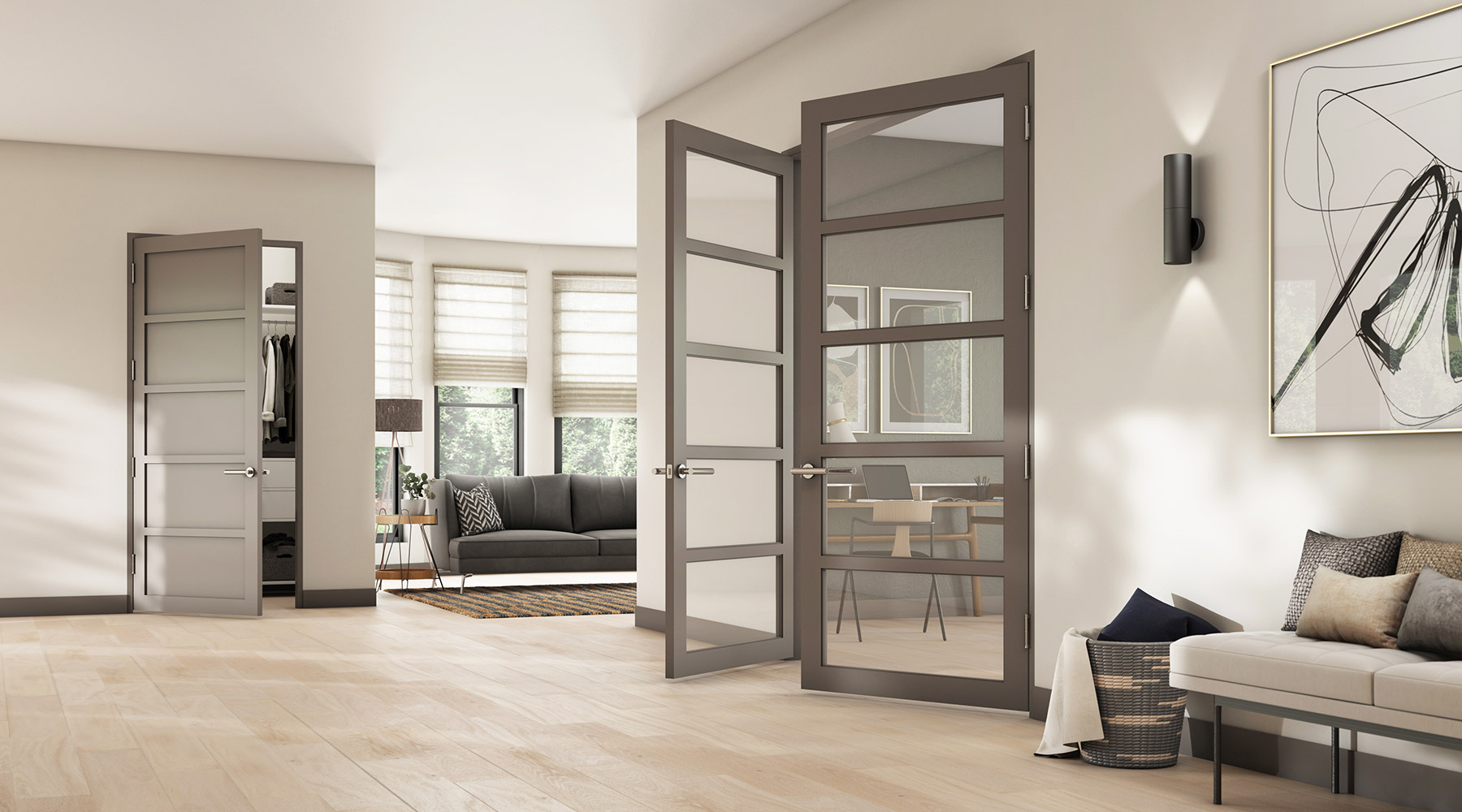
Door design can also affect how a room feels. Glass panels may allow light to pass between spaces, while solid panels can create a more private and visually substantial appearance. A carefully selected door color can blend into the surrounding walls or become a defining design feature.
When selecting new interior doors, homeowners should consider the following:
- Architectural style: Choose designs that complement the home’s existing features rather than competing with them.
- Room function: Bedrooms and bathrooms generally require privacy, while some offices, dining rooms, and shared living spaces may benefit from glass panels.
- Available space: Door operation matters in smaller rooms, narrow hallways, and areas with limited clearance.
- Finishes and hardware: Paint colors, wood tones, hinges, and handles should work together.
- Consistency: Doors throughout the home should share enough design characteristics to create a cohesive appearance.
These considerations provide a useful starting point before comparing specific door styles.
Shaker-Style Doors for Clean, Versatile Design
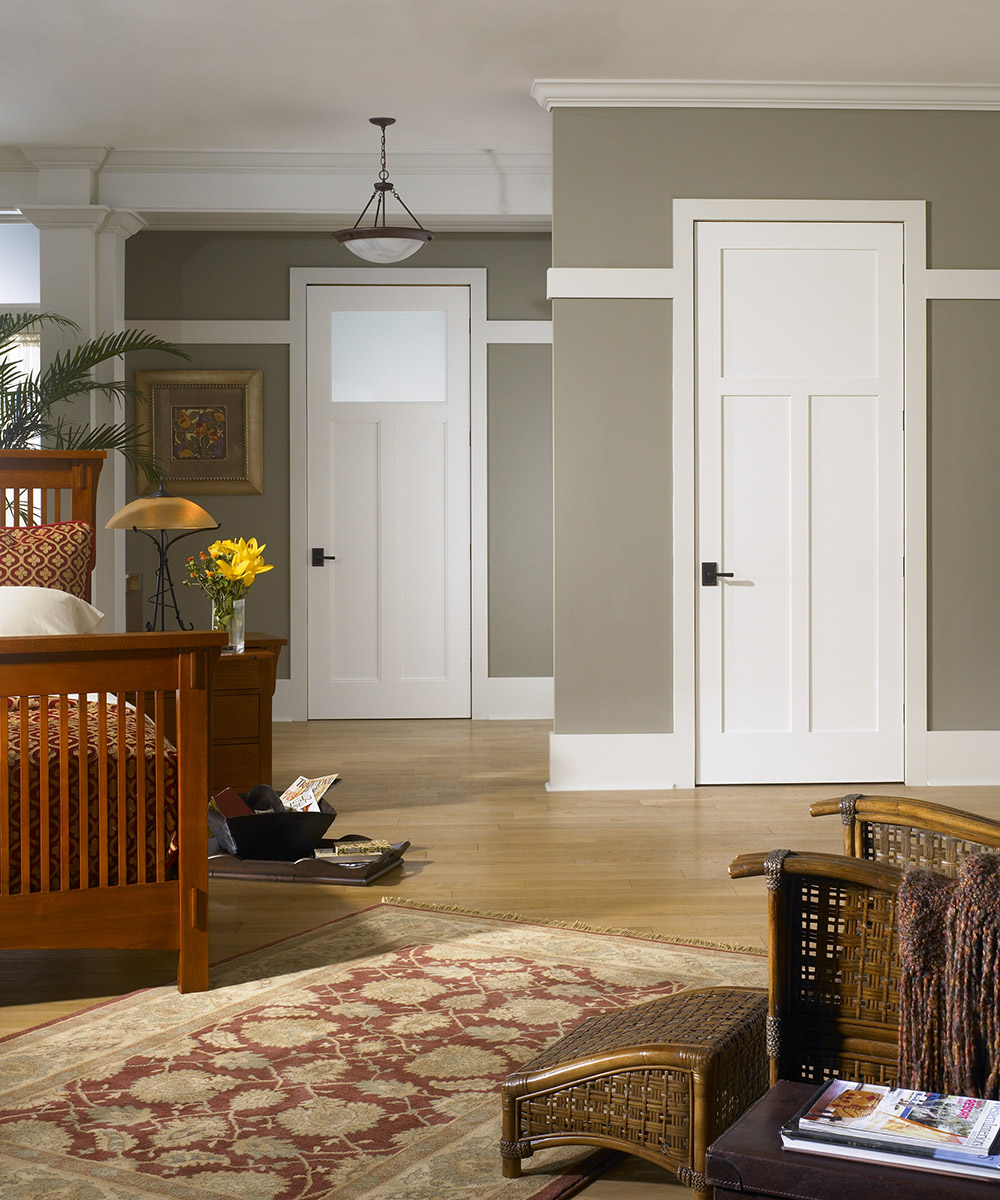
Shaker-style doors are known for their simple, understated appearance. A typical design features a flat center panel framed by straightforward rails and stiles, creating a clean geometric pattern without elaborate ornamentation.
This simplicity makes Shaker-style doors adaptable to many interiors. They can complement modern farmhouse designs, transitional homes, and contemporary spaces that incorporate natural materials and restrained detailing.
In a white or light-colored interior, a Shaker door can blend naturally with the surrounding trim. In a room with darker walls or contrasting hardware, the same door style can provide a subtle architectural accent.
Shaker-style doors are particularly useful when homeowners want a consistent look throughout the house without introducing overly decorative details. They can work in bedrooms, closets, bathrooms, and home offices, depending on the selected construction and configuration.
When evaluating this style, consider the proportions of the panels and the width of the surrounding trim. A door with balanced proportions can look intentional even in a simple interior.
2. Modern Flush Doors for Minimalist Interiors
Flush doors feature a smooth, flat surface with little or no raised panel detailing. Their understated design makes them a natural choice for contemporary interiors, minimalist renovations, and homes that emphasize clean lines.
Unlike heavily paneled doors, flush doors do not draw as much attention to their surface. This allows other features, such as artwork, lighting, flooring, and furniture, to take center stage.
Flush doors can also help create visual continuity when repeated throughout a home. When their finishes coordinate with the surrounding walls, they can make hallways and smaller rooms feel less visually busy.
Homeowners considering flush doors should pay attention to the quality of the finish, edge detailing, and hardware. Because the design is simple, small differences in alignment and finishing can become more noticeable.
A flush door does not have to look plain. A carefully selected wood finish, a contrasting paint color, or a distinctive handle can give the design more personality without adding decorative paneling.
3. Traditional Panel Doors for Timeless Character
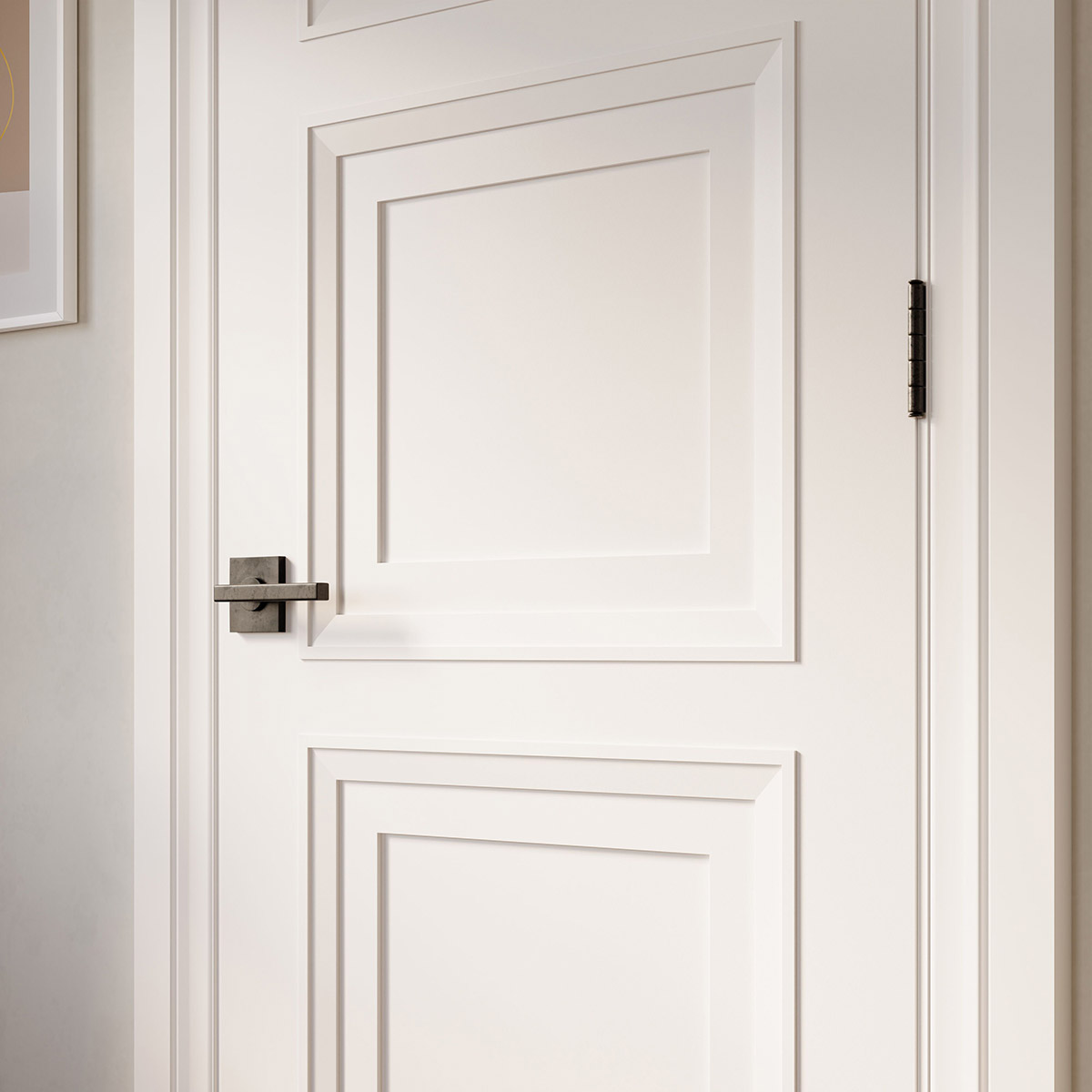
Traditional panel doors feature raised or recessed panels that add depth and architectural detail. Depending on their configuration, they can suit classic, colonial-inspired, transitional, and other traditional interiors.
Two-panel, three-panel, and other multi-panel arrangements create different visual effects. Taller vertical panels may emphasize height, while more intricate configurations can reinforce a formal or historically inspired aesthetic.
These doors can work especially well in homes with crown molding, detailed baseboards, wood flooring, and other established architectural features. Matching the door profile to the existing trim can help a renovation feel integrated with the rest of the house.
However, traditional does not have to mean ornate. A straightforward panel design can provide character without overwhelming a room with otherwise contemporary finishes.
When choosing a panel door, compare its proportions with the home’s ceiling height, casing, and surrounding architectural details. The goal is to create a balanced appearance that feels appropriate to the space.
4. Glass-Panel Doors for Light and Visual Connection
Glass-panel interior doors can introduce natural light and create a visual connection between adjoining rooms. They may be particularly useful for home offices, dining rooms, studies, and other spaces where homeowners want some separation without completely closing off the interior.
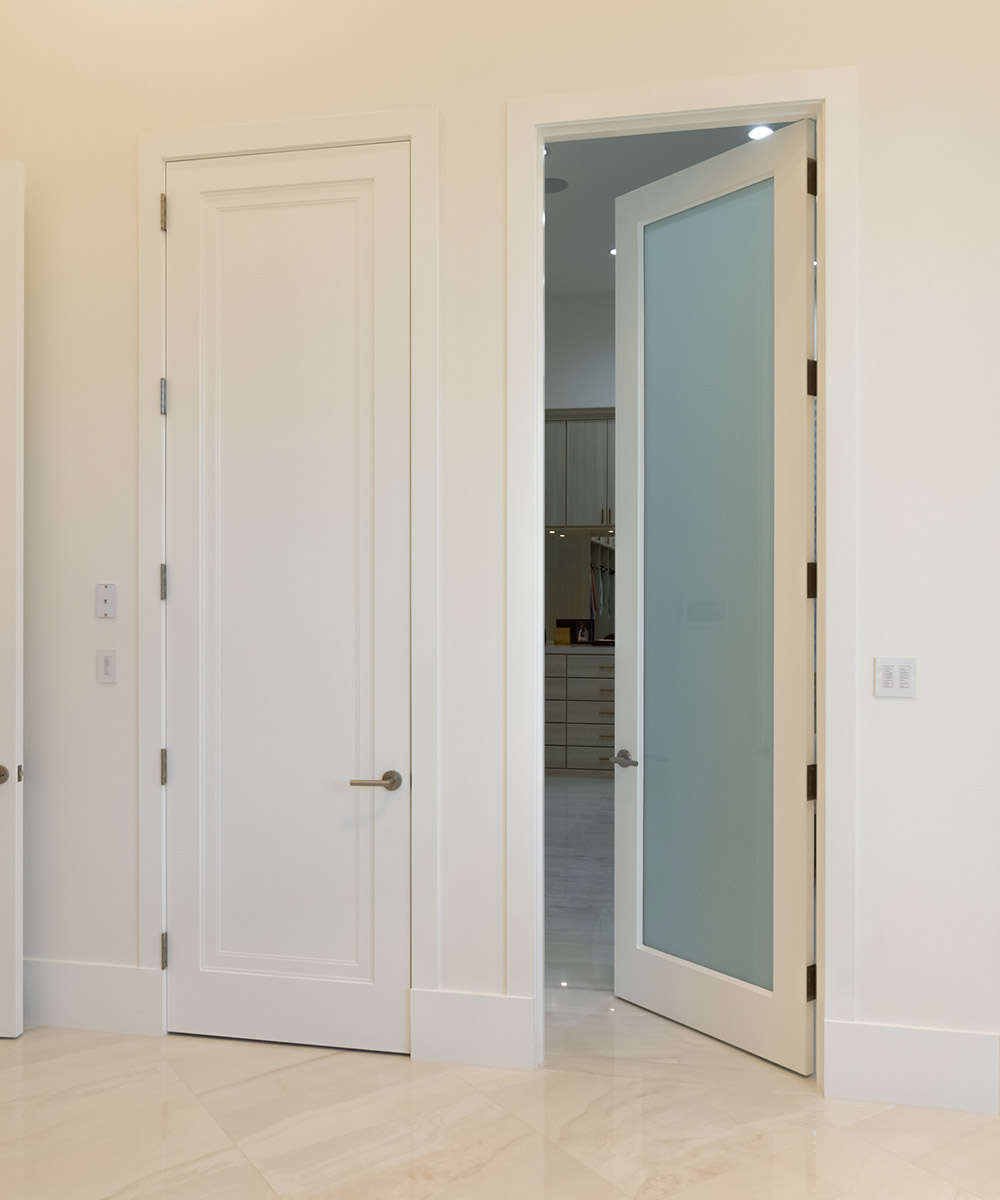
Clear glass provides the strongest visual connection between spaces. Frosted or other privacy-oriented glass options can offer a different balance between light transmission and visibility, depending on the specific product.
Glass-panel doors can also complement modern and transitional interiors, especially when their frames and hardware coordinate with nearby windows and other metal finishes.
There are practical considerations, however. A glass door may not provide the same visual privacy as an opaque door, and its sound-control performance depends on the complete door assembly and installation. Homeowners should evaluate the intended use of the room before choosing a glass configuration.
For a home office, for instance, the amount of privacy needed during calls may influence whether clear glass, privacy glass, or a solid door makes the most sense.
5. Contemporary Doors With Distinctive Panel Patterns
Some homeowners want more visual interest than a flush door offers but prefer something less traditional than a conventional raised-panel design. Contemporary doors with geometric, asymmetrical, or otherwise distinctive panel arrangements can provide that middle ground.
These designs can become subtle focal points in an entry hall, primary bedroom, or renovated living area. They are especially effective when the rest of the room has relatively restrained finishes.
The key is to balance the door’s visual detail with the surrounding interior. A distinctive panel pattern may work well with simple trim and understated hardware, while an elaborate casing could make the overall composition feel crowded.
Homeowners should also consider whether the design will remain appropriate as furnishings and paint colors change. A distinctive door can have lasting appeal when its detailing complements the home’s architecture rather than relying entirely on a passing trend.
Discovering TruStile Interior Doors
For homeowners interested in interior doors that contribute meaningfully to a home’s design, TruStile is an important brand to explore.
TruStile, a Marvin brand, focuses on interior doors that combine design flexibility with craftsmanship. The brand was established to expand the possibilities of interior door materials and design, making doors an intentional part of a room’s architecture rather than an afterthought.
TruStile offers a range of design directions, from understated contemporary looks to more traditional panel arrangements. Depending on the product selected, homeowners may be able to explore different profiles, materials, and finish possibilities to suit the project.
When considering TruStile doors, think about how each room fits into the overall design plan. A homeowner renovating several rooms may prefer a consistent door style throughout the house, while someone updating a home office or primary suite may want a distinctive design in one particular area.
It is also important to confirm the available construction, sizes, finishes, and configurations for the specific door being considered. Product options vary, so the right choice depends on the project’s requirements and the manufacturer’s specifications.
General Lumber features TruStile among its premium brands and offers a showroom environment where customers can explore building products and discuss their projects with knowledgeable staff. Seeing door designs in person can help homeowners compare proportions and finishes more confidently than relying on photographs alone.
Pairing Interior Doors With Marvin Windows
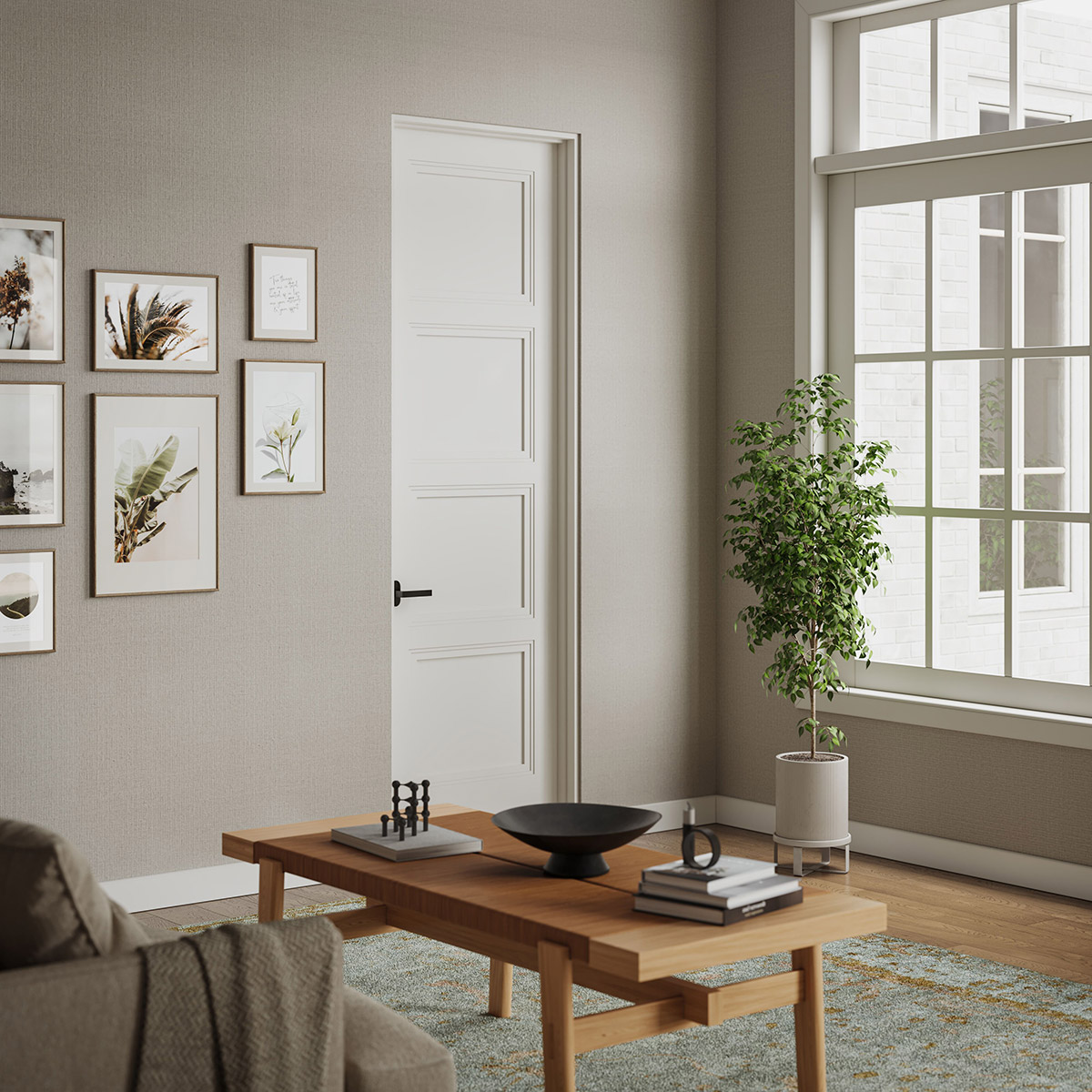
Interior doors are only one part of a home’s overall design. Windows also influence the appearance of each room, particularly when their interior finishes, proportions, and surrounding trim are visible alongside the doors.
Coordinating these elements does not mean that every door and window must match exactly. Instead, the goal is to establish a consistent design language through complementary materials, colors, proportions, and detailing.
For example, a homeowner choosing clean-lined TruStile interior doors for a contemporary renovation may want to explore Marvin window designs with similarly restrained profiles. Marvin’s Essential collection features streamlined styling and fiberglass interiors and exteriors, while the Marvin Elevate collection combines wood interiors with fiberglass exteriors. The Marvin Ultimate collection offers a broader range of design possibilities for projects with more specific aesthetic requirements.
These collections provide different ways to approach the balance between appearance, materials, and performance. The appropriate option depends on the home’s architectural style, project specifications, and the homeowner’s priorities.
Consider these design principles when coordinating doors and windows:
- Coordinate interior finishes: Painted doors can complement painted window interiors, while natural wood finishes may introduce warmth to a room.
- Consider sightlines: Simple door profiles can work well with windows that emphasize clean lines and unobstructed views.
- Balance contrast: Dark hardware or window finishes can provide definition against lighter walls and doors.
- Respect architectural character: Traditional homes may benefit from more detailed profiles, while contemporary spaces often favor simpler forms.
- Think about the whole room: Flooring, trim, cabinetry, lighting, and furniture all influence how doors and windows work together.
Homeowners do not need to select every product at once, but planning these elements together can help prevent mismatched finishes and inconsistent design choices.
General Lumber carries Marvin products and offers guidance for window and door projects. Its showroom can be a useful place to begin comparing options for a coordinated renovation.
Choosing Door Finishes, Colors, and Hardware
The door style establishes the basic design, but finishes and hardware determine how it comes together.
Painted doors remain a versatile option because they can coordinate with wall colors, trim, and cabinetry. White and off-white finishes create a familiar, understated appearance, while darker colors can introduce contrast and definition.
Wood finishes can add warmth and emphasize the material’s natural character. Their appearance depends on the wood species, stain, finish, and surrounding light, so it is helpful to evaluate samples before making a final decision.
Hardware also deserves careful attention. Lever handles, knobs, hinges, and other details should complement the door style and function comfortably for the people using it.
A contemporary flush door may pair naturally with streamlined hardware, while a traditional paneled door may work with a more classic handle design. These are guidelines rather than strict rules, and mixing styles can be effective when the finishes are coordinated thoughtfully.
Practical requirements matter just as much as appearance. Confirm the door’s handing, dimensions, thickness, hardware preparation, and compatibility with the existing frame before ordering.
What to Consider Before Replacing Interior Doors
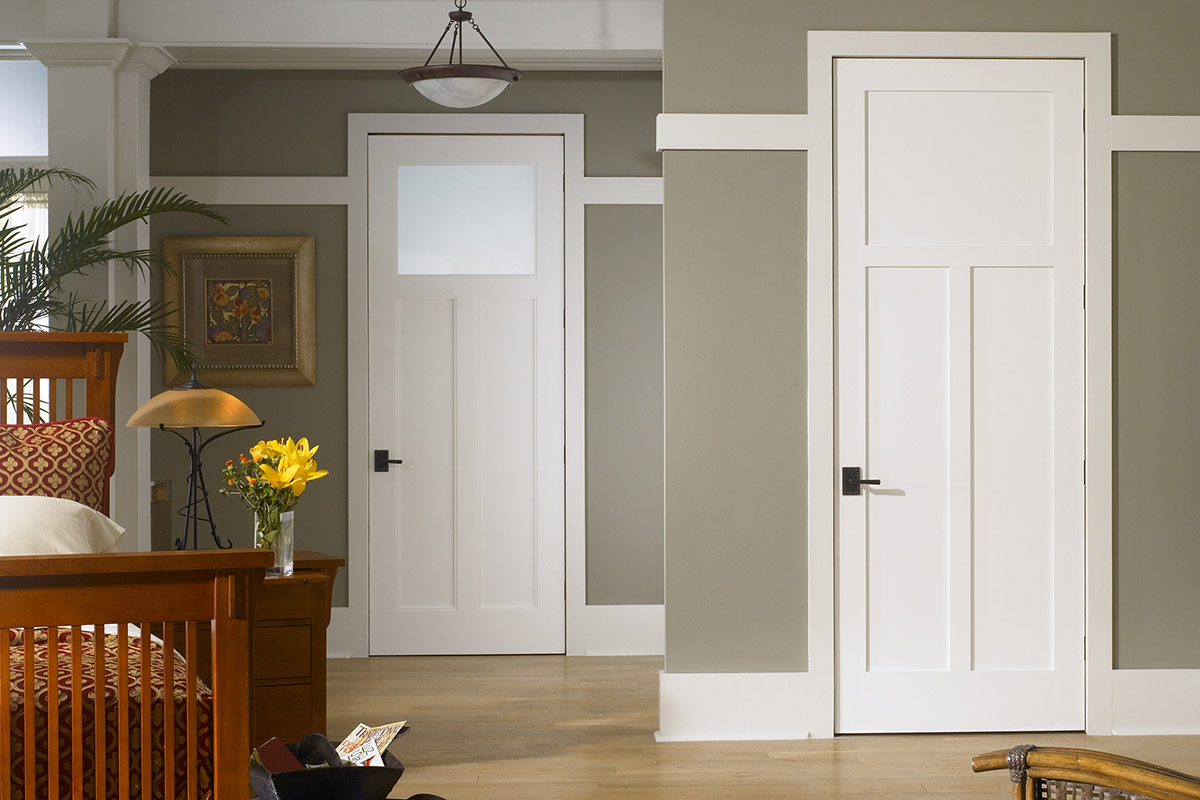
Before purchasing new doors, homeowners should assess the existing openings and determine whether the project involves replacing the door slab alone or changing the frame and surrounding trim as well.
Replacing a door slab may be relatively straightforward when the existing frame is in good condition and compatible with the new door. A project involving damaged frames, altered openings, or changes to door dimensions may require additional carpentry and finishing.
It is also worth checking how the door will operate within the room. A swinging door needs adequate clearance, while a pocket or other space-saving configuration may involve additional construction and hardware requirements.
If several doors are being replaced, measuring and documenting each opening can help prevent ordering mistakes. Door sizes, handing, frame conditions, and hardware requirements should be verified before finalizing the order.
General Lumber’s team works with customers on window and door projects from product selection through installation. Discussing the existing conditions and intended design early in the process can help clarify which products and installation requirements are appropriate.
FAQ – Interior Door Styles
What are the most popular interior door styles?
The most popular interior door styles are Shaker, flush, traditional raised or recessed panel, glass-panel (including French doors), and contemporary doors with geometric panel patterns. Shaker doors are among the most versatile because their simple flat panels suit transitional, farmhouse and contemporary homes. The best style depends on the home’s architecture, trim and how each room is used.
Should all interior doors in a house match?
Interior doors don’t need to be identical, but they should share enough design characteristics, such as panel style, finish and hardware, to create a cohesive look. Many homeowners use one main style throughout the home and introduce a distinctive door, such as a glass-panel office door or a statement door to a primary suite, in one or two rooms.
What is the difference between solid-core and hollow-core interior doors?
Solid-core doors have a dense interior that makes them feel more substantial and helps reduce sound transmission between rooms, which is valuable for bedrooms, offices and bathrooms. Hollow-core doors are lighter and are often used for closets and secondary spaces. Core construction varies by manufacturer and product, so confirm the specifications for the door you choose.
Can I replace just the interior door, or do I need a new frame?
If the existing frame is square, in good condition and compatible with the new door, you can often replace the door slab alone. If the frame is damaged, out of square, or the opening size is changing, a prehung door, which comes already mounted in a new frame, is usually the better choice. Measure each opening and confirm handing, size and hardware preparation before ordering.
Where can I see TruStile interior doors in Hoboken, NJ?
General Lumber’s showroom at 200 Clinton Street in Hoboken, NJ features TruStile interior doors, a Marvin brand, alongside Marvin windows and other premium door brands. Family-owned for nearly a century, General Lumber helps homeowners and contractors across Hudson County, Northern New Jersey and the New York City metro compare styles, finishes and hardware in person.
Transform Your Home With Thoughtfully Selected Doors
Interior doors can have a lasting impact on a home’s appearance. Whether you prefer Shaker-style panels, smooth contemporary surfaces, traditional detailing, or glass-panel designs, the right choice can strengthen the connection between rooms and support a more cohesive interior.
TruStile offers homeowners a range of interior door design possibilities, while Marvin window collections provide additional options for coordinating the home’s architectural details.
For homeowners in Hoboken, Hudson County, and the surrounding New Jersey and New York area, General Lumber offers access to premium door and window brands, an in-person showroom, and guidance throughout the selection process.